

“Hydrogen therapy” is a popular shorthand for using molecular hydrogen (H2) through inhalation, hydrogen-rich water or, less commonly, topical exposure. The term can sound more medically established than the evidence supports. A more precise description is molecular hydrogen administration or molecular hydrogen wellness. Research is active, but hydrogen products should not be presented as a replacement for diagnosis, prescribed medicine, surgery or other established care.
This guide explains the main delivery methods, what researchers are investigating, where the evidence remains uncertain, and what distributors and wellness operators should check before selecting equipment.
Evidence update: reviews published through 2025 describe molecular hydrogen as a research candidate across multiple areas, while continuing to call for adequately powered, indication-specific clinical trials. Laboratory plausibility and early safety findings should not be converted into guaranteed commercial health claims.
What is molecular hydrogen?
Molecular hydrogen is the small, colourless gas represented by H2. It should not be confused with hydrogen peroxide, hydrogen ions, alkaline water or oxygen. Because the H2 molecule is small and diffuses rapidly, scientists have studied how it behaves in cells, animal models and people.
A widely cited 2007 laboratory and animal study reported that H2 reduced hydroxyl radicals under the conditions tested without reacting with several other reactive oxygen species. That study helped stimulate modern molecular-hydrogen research, but it did not establish that commercial hydrogen products prevent or cure human disease.
Hydrogen therapy at a glance
| Delivery route | What is delivered | Main quality variables | Evidence caution |
|---|---|---|---|
| Gas inhalation | Molecular hydrogen gas, or a model-specific hydrogen–oxygen mixture | Gas composition, measured flow, session duration, ventilation and safety controls | Clinical findings are indication- and protocol-specific; they do not validate unsupervised disease treatment. |
| Hydrogen-rich water | Water containing dissolved H2 | Dissolved concentration at consumption, container, temperature and time after generation | Small trials cannot support broad claims for metabolism, ageing or recovery. |
| Topical or bathing use | Hydrogen-rich water or research formulations applied to skin | Starting concentration, exposed area, temperature and exposure time | Human evidence is early and product-specific; cosmetic and disease claims require separate support. |
How do people take molecular hydrogen?
1. Hydrogen gas inhalation
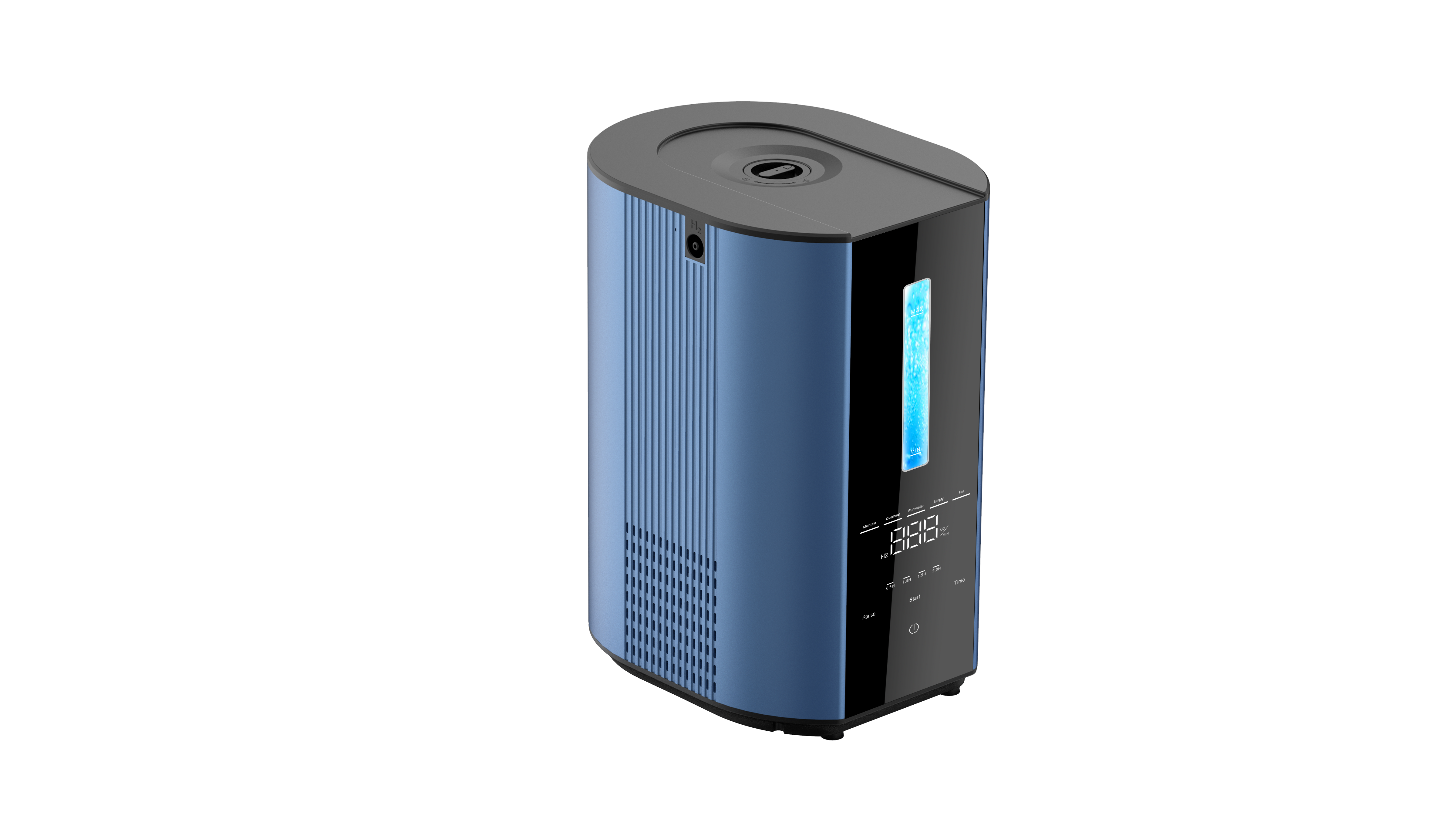
A hydrogen generator produces a controlled gas stream that is delivered through a compatible nasal cannula or other manufacturer-specified accessory. Inhalation is direct and allows the device to control operating time and output. Buyers should compare the stated gas composition, flow rate, water requirements, alarms, ventilation guidance, electrical version and product-specific documentation.
The correct term is molecular hydrogen gas (H2), not “hydrogen ions.” A hydrogen ion is a charged chemical species and is not what users inhale from a hydrogen gas generator. Product information should also distinguish a pure-hydrogen output from a hydrogen–oxygen output rather than treating the two as identical.
Hydrogen is flammable at certain concentrations in air. Equipment must therefore be used exactly as instructed, away from ignition sources and in a properly ventilated environment. Users should never improvise tubing, combine gases or modify a device.
2. Hydrogen-rich water
Hydrogen-rich water contains dissolved molecular hydrogen. It can be produced by suitable electrolysis systems, hydrogen-water bottles or other controlled dissolution methods. H2 gradually escapes after production, so concentration, container design, storage and the time between generation and drinking all matter.
Small human studies have investigated hydrogen-rich water in exercise and recovery settings. Some reported changes in selected performance or recovery measures, while other randomized studies found no meaningful improvement in key outcomes. These studies are often small and use different concentrations and protocols, so results should not be generalized into guaranteed benefits.
3. Topical exposure and hydrogen baths
Hydrogen baths, hydrogen-water rinses and topical applications are discussed in the literature and consumer market, but the human evidence and standardized dosing are less developed than the marketing sometimes suggests. Distributors should avoid claiming that topical hydrogen treats skin disease unless the exact product, claim and supporting evidence have been accepted by the relevant regulator.
What biological mechanisms are being researched?
Researchers have investigated several possible pathways, including redox signalling, oxidative-stress responses, inflammation-related signalling, mitochondrial function and gene expression. “Selective antioxidant” is a common description arising from early research, but it is not a complete explanation of every reported effect.
It is more accurate to say that molecular hydrogen is being studied for its potential influence on these pathways. Statements such as “precisely removes harmful radicals,” “stops inflammation,” “protects organs,” or “produces only water and therefore has no side effects” go beyond what current evidence can establish for every person, dose, delivery method and device.
Redox biology is more complex than “free-radical removal”
Reactive oxygen species are not uniformly harmful. Some participate in normal signalling, immune defence and adaptation. Research reviews discuss possible direct reactions with highly reactive species as well as indirect effects involving Nrf2, NF-κB, gene expression and mitochondrial signalling. The exact contribution of each pathway in people remains unresolved.
Molecular hydrogen is small and uncharged, and experimental literature reports rapid diffusion across biological membranes. This property explains scientific interest, but the ability to diffuse does not prove that every device, dose or exposure produces a therapeutic concentration in a target organ.
What does human research currently show?
The research landscape includes pilot trials, randomized studies and systematic reviews, but results vary by population, route, dose and endpoint.
- Exercise and recovery: some controlled studies report improvements in selected fatigue, power, oxidative-stress or recovery measures. A recent athlete study reported changes after inhalation, but it does not establish a universal protocol. Other randomized studies report no improvement in running performance or important recovery outcomes.
- Clinical conditions: disease-specific research remains investigational. For example, a randomized double-blind pilot trial of hydrogen inhalation in people with Parkinson’s disease reported no significant clinical benefit over placebo during the study period.
- Inhalation safety: a phase-one study exposed eight healthy adults to 2.4% hydrogen in medical air for 24–72 hours without clinically significant adverse events. This is useful early evidence, but the sample was small and does not prove that every concentration, device or long-term pattern is risk-free.
Why animal studies must be labelled clearly
A frequently cited 2018 paper investigated different inhaled hydrogen concentrations in mice with experimentally induced spinal-cord injury. The results can help researchers form hypotheses about oxidative injury, apoptosis and mitochondria, but they do not demonstrate that hydrogen inhalation treats spinal-cord injury in people. Animal dose comparisons should never be copied directly into consumer instructions.
What a 2025 critical-illness review means
A 2025 hypothesis and narrative review summarized preclinical and human hydrogen research in critical illness and argued for larger clinical trials. It is useful as an overview of proposed mechanisms and research opportunities. It is not a treatment guideline, product approval or proof that home equipment can manage sepsis, lung injury, stroke or other emergencies.
For that reason, hydrogen equipment should be marketed as wellness or research-related equipment only where appropriate, with claims matched to local regulations. People with medical conditions, pregnant users, children and anyone receiving treatment should seek qualified medical advice before use.
Can hydrogen replace medical treatment?
No. Molecular hydrogen should not be used as a substitute for emergency care, prescribed medicine, cancer treatment, neurological treatment or management of metabolic and inflammatory disease. Claims involving cancer therapy, Parkinson’s disease, Alzheimer’s disease, rheumatoid arthritis, diabetes, fatty liver disease or treatment side effects require high-quality, indication-specific evidence and regulatory authorization.
Using several hydrogen delivery methods together should also not be described as automatically “more effective.” More exposure is not necessarily better, and combined protocols have not been standardized for general consumer use.
Hydrogen inhalation safety basics
- Use only the water type, tubing and accessories specified for the exact model.
- Keep equipment away from flames, sparks, smoking and heat sources.
- Do not enclose a running generator in a small, unventilated space.
- Never alter flow, combine outputs or connect the machine to oxygen or ventilation equipment unless the system is specifically designed and professionally authorized for that configuration.
- Do not infer a safe home setting from a hospital trial; clinical studies use defined protocols, monitoring and study-grade equipment.
- Stop use and obtain professional advice if symptoms occur.
Where is hydrogen equipment commonly positioned?
Depending on local rules and product documentation, molecular hydrogen equipment may be considered for home-wellness catalogues, fitness and recovery businesses, spas, wellness centres, hospitality projects, distributor showrooms and selected professionally supervised environments. The setting does not itself establish a medical use.
For overseas buyers, the practical question is not simply “where can it be used?” but “what intended use, instructions, technical file, electrical standard and marketing claims are permitted in the destination market?”
Buyer checklist for hydrogen inhalation equipment
- Confirm the exact gas output, composition and measurement method.
- Review operating time, water requirements, alarms and maintenance.
- Check ventilation, ignition-source warnings and electrical safety instructions.
- Request documentation for the exact model and configuration—not a generic certificate image.
- Confirm plug, voltage, manual language, labels and packaging for the target country.
- Define whether the product is positioned for general wellness or a regulated medical purpose.
- Remove unsupported disease-treatment and “zero risk” claims from distributor advertising.
- Plan replacement accessories, warranty handling and after-sales training.
Youborui supplies hydrogen inhalation and hydrogen-water equipment for international wholesale, distributor and private-label projects. Buyers can compare the H300 hydrogen inhalation machine, H600 hydrogen generator and HO1000 hydrogen-oxygen machine, or visit the hydrogen inhalation machine manufacturer guide.
Frequently asked questions
Is “hydrogen therapy” an established medical treatment?
The phrase covers several experimental and wellness uses of molecular hydrogen. Evidence varies by application, and the term should not be used to imply approval for treating disease.
What is the difference between hydrogen inhalation and hydrogen-rich water?
Inhalation delivers a generated gas stream through a compatible accessory, while hydrogen-rich water contains dissolved H2. They use different equipment, exposure patterns and quality checks.
Is inhaled hydrogen the same as hydrogen ions?
No. Hydrogen inhalation equipment delivers molecular hydrogen gas, H2, or a specified gas mixture. “Hydrogen ion inhalation” is chemically inaccurate terminology.
Is molecular hydrogen completely free of risk?
No product or exposure should be described as risk-free. Hydrogen gas is flammable under certain conditions, device quality matters, and available human safety studies do not cover every concentration, user or long-term use pattern.
Can distributors advertise disease-treatment benefits?
Only claims supported and authorized for the exact product in the destination market should be used. General research cannot automatically be converted into a commercial treatment claim.
Research references
- Ohsawa I, et al. Hydrogen acts as a therapeutic antioxidant by selectively reducing cytotoxic oxygen radicals. Nature Medicine. 2007.
- Hirayama M, et al. Randomized double-blind placebo-controlled trial of hydrogen inhalation for Parkinson’s disease: a pilot study. 2021.
- Cole AR, et al. Safety of prolonged inhalation of hydrogen gas in air in healthy adults. 2021.
- Sládečková B, et al. Hydrogen-rich water supplementation and recovery after strenuous training. 2024.
- Botek M, et al. Acute pre-exercise hydrogen-rich water did not improve maximal-aerobic-speed running performance. 2022.
- Tian Y, et al. Hydrogen, a Novel Therapeutic Molecule, Regulates Oxidative Stress, Inflammation, and Apoptosis. Frontiers in Physiology. 2021.
- Chen X, et al. Inhalation of Hydrogen of Different Concentrations Ameliorates Spinal Cord Injury in Mice. 2018.
- Chawla LS. Gas as medicine: the case for hydrogen gas as a therapeutic agent for critical illness. Intensive Care Medicine Experimental. 2025.
- Zhang, et al. Alleviation of exercise-induced injury by hydrogen inhalation via the reduction of oxidative stress and inflammation in athletes. 2025.
Educational notice: This article summarizes research for buyers and wellness-equipment professionals. It is not medical advice and does not establish that any Youborui product diagnoses, treats, cures or prevents disease.
Request model specifications, OEM options and distributor information.