

Buyers comparing a hydrogen inhalation machine, hydrogen-water system or private-label hydrogen generator often encounter two labels: SPE and PEM. Are they competing technologies? Is one safer or purer than the other? In most modern water-electrolysis discussions, the answer is simpler: SPE and PEM usually describe the same solid-polymer-electrolyte technology family from slightly different naming traditions.
PEM can mean proton exchange membrane or polymer electrolyte membrane. SPE commonly means solid polymer electrolyte. Technical literature notes that proton/polymer exchange membrane water electrolysis is also, though less commonly today, called SPE water electrolysis. The terms are therefore closely related and are often used interchangeably—not two rival processes that must be installed together.
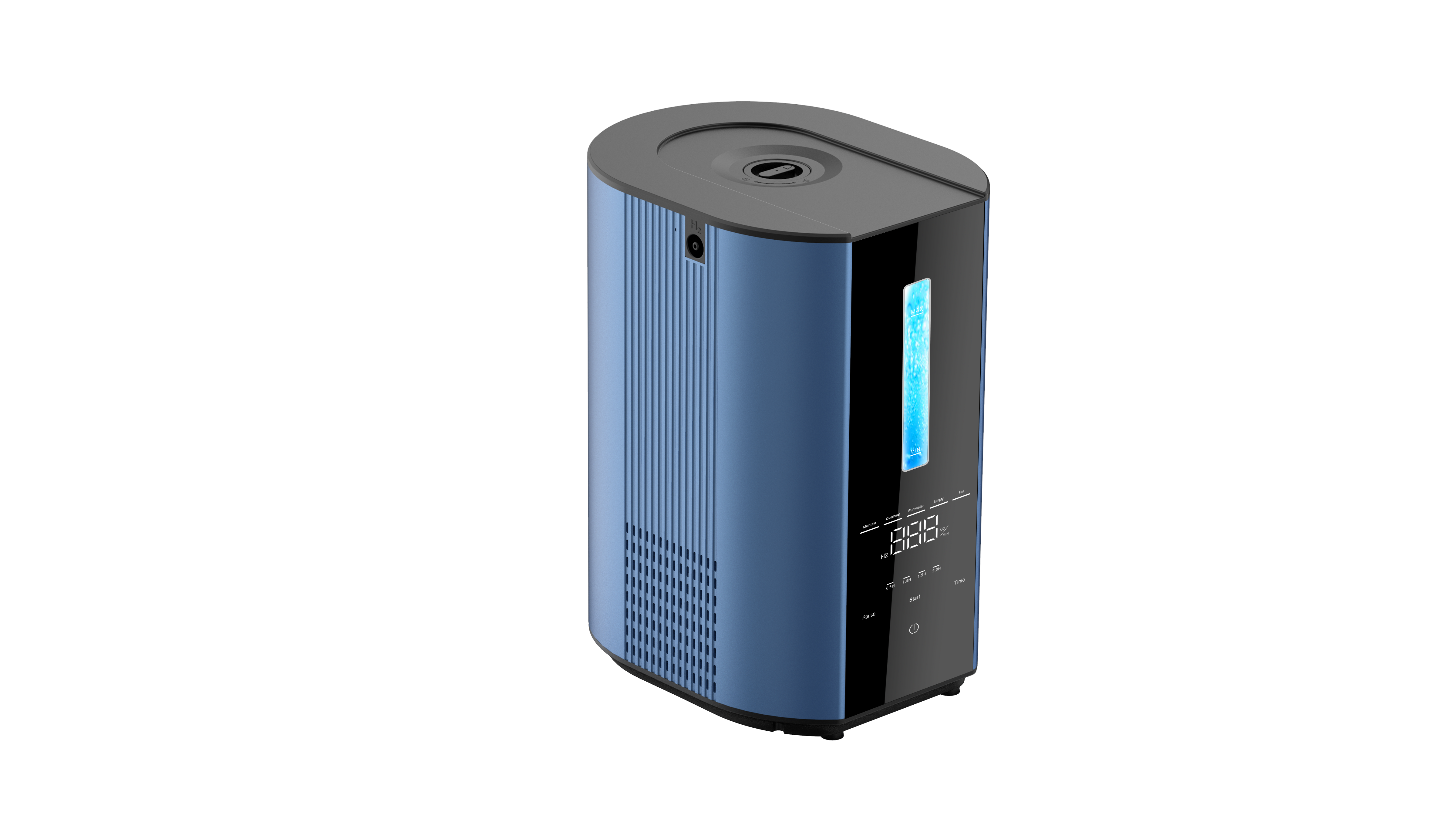
What does SPE mean in hydrogen generation?
SPE refers to a solid polymer electrolyte. In a PEM water electrolyser, the hydrated polymer membrane conducts protons while also helping separate the anode and cathode compartments. This differs from conventional alkaline water electrolysis, which normally uses a circulating or stationary liquid alkaline electrolyte such as potassium hydroxide or sodium hydroxide together with a separator.
The important distinction is not “chemicals versus no chemicals.” Every electrolyser uses engineered materials, catalysts and water chemistry. The practical distinction is that a PEM/SPE cell uses a solid ion-conducting polymer rather than a bulk liquid alkaline electrolyte. That can support a compact cell architecture and simplify some aspects of gas separation, but it does not eliminate the need for high-quality materials, correct water, maintenance and system controls.
What does PEM mean?
PEM has two widely used expansions:
- Proton exchange membrane: emphasizes that the membrane transports protons (H+).
- Polymer electrolyte membrane: emphasizes that the polymer membrane functions as the solid electrolyte.
Both names refer to the same central membrane function in this application. The membrane is part of a larger membrane electrode assembly (MEA), which normally includes catalyst layers. A complete stack also requires porous transport layers, current collectors or bipolar plates, seals, compression hardware and electrical connections.
How does a PEM/SPE water electrolyser produce hydrogen?
The basic process has four stages:
- Water reaches the anode side. The exact water circulation and feed arrangement depends on the stack and system design.
- Oxygen evolution occurs at the anode. Water is electrochemically split, producing oxygen, protons and electrons.
- Protons cross the hydrated membrane. Electrons travel through the external electrical circuit rather than through the membrane.
- Hydrogen forms at the cathode. Protons and electrons combine to produce molecular hydrogen (H2).
The overall reaction is water becoming hydrogen and oxygen. However, the output that reaches a user depends on the complete product design. Some systems route only the hydrogen stream, while other machines are designed around a specified hydrogen–oxygen output. The electrolyser type alone does not tell the buyer which gas stream is delivered.
Are SPE and PEM the same technology?
For most buyer conversations, yes: they are overlapping terms for the same solid-polymer-membrane electrolysis family. It is not technically precise to say that SPE is only the “principle” while PEM is only the “physical component.” SPE describes the solid polymer electrolyte concept/material, and PEM describes the proton-conducting polymer membrane at the centre of that same electrochemical system.
| Term | Common meaning | What it tells a buyer |
|---|---|---|
| SPE | Solid polymer electrolyte | The cell uses a solid ion-conducting polymer electrolyte rather than a bulk liquid alkaline electrolyte. |
| PEM | Proton exchange membrane or polymer electrolyte membrane | The membrane conducts protons and is part of the gas-separating membrane electrode assembly. |
| PEMWE | PEM water electrolysis | The full water-electrolysis technology category. |
| MEA | Membrane electrode assembly | The integrated membrane and catalyst-layer assembly inside the cell. |
Does PEM automatically guarantee 99.99% hydrogen purity?
No single acronym guarantees a numerical purity value. PEM electrolysis is capable of high-purity hydrogen production, but the purity delivered by a commercial machine depends on several variables:
- membrane material, thickness, condition and gas permeability;
- cell current density, temperature and pressure;
- hydrogen and oxygen gas crossover;
- water quality and contamination control;
- gas–liquid separation, drying and any downstream purification;
- tubing, valves, reservoirs, seals and assembly cleanliness;
- the measurement instrument, sampling point and test method.
Gas crossover cannot be treated as zero. Research on PEM electrolysers shows that membrane thickness, pressure and operating load influence crossover, purity, efficiency and safety. A supplier claiming 99.99% purity should therefore provide a model-specific test report that states the gas measured, sampling location, operating condition, detection method and laboratory or instrument used.
Does PEM guarantee “no ozone or chlorine”?
PEM technology by itself is not enough to make that blanket promise. Chloride and other impurities in feedwater can affect reactions, components and product-gas quality. Buyers should follow the exact water specification supplied by the manufacturer—commonly purified, distilled or deionized water depending on the model—and should never add salt, alkaline electrolyte, fragrance, minerals or other substances unless the equipment instructions explicitly permit it.
If ozone, chlorine or another impurity is a buyer concern, request product-specific analytical testing. The test should reflect the actual water, stack, operating mode and gas outlet used in the finished machine.
PEM/SPE compared with alkaline electrolysis
Alkaline and PEM electrolysers are established but different water-electrolysis categories. Alkaline systems use a liquid alkaline electrolyte and separator; PEM systems use a proton-conducting solid polymer membrane and normally operate in an acidic catalyst environment. PEM technology is associated with compact construction, high current density and strong dynamic response, while challenges include catalyst cost, membrane durability, water purity requirements and gas crossover management.
It is inaccurate to imply that a properly engineered alkaline electrolyser automatically releases “toxic alkaline mist.” Likewise, it is inaccurate to assume that any machine carrying a PEM sticker is automatically safe or suitable for inhalation. Safety is a property of the tested complete system, its intended use and its operating instructions.
What should buyers verify in a PEM hydrogen generator?
1. Exact output specification
Confirm whether the quoted flow is hydrogen only, total mixed gas or another defined stream. Ask for the tolerance, measurement conditions and whether the figure is nominal or tested.
2. Gas-composition and purity report
Request a report for the exact model. It should identify H2, O2, water vapour and any impurity parameters relevant to the intended market.
3. Feedwater specification
Check the required conductivity or water grade, reservoir-cleaning process and replacement schedule. Incorrect water can reduce performance and accelerate contamination or degradation.
4. Stack and balance-of-plant design
The membrane stack is only one part of the machine. Review gas–liquid separation, drying, pressure control, leak detection, alarms, automatic shutdown and ventilation instructions.
5. Materials in the gas pathway
Ask which materials contact the produced gas and water. Model-specific material declarations and test reports are more useful than generic statements such as “medical grade.”
6. Electrical and market compliance
Verify voltage, plug, labels, manual language, EMC/electrical-safety documentation and any additional rules that apply to the intended use and destination country. “Clinical grade” is not a universal technical category and should not be used without an applicable regulatory basis.
Common SPE/PEM purchasing mistakes
- Treating SPE and PEM as two separate technologies that must be combined.
- Assuming a membrane name proves gas purity.
- Comparing flow rates without confirming whether they refer to hydrogen or total gas.
- Ignoring water-quality and maintenance requirements.
- Accepting a generic certificate that does not identify the model.
- Using “medical,” “clinical” or disease-treatment language without the necessary evidence and authorization.
Choosing a hydrogen machine for OEM or distribution
For B2B sourcing, the strongest specification is a traceable combination of stack description, measured output, gas analysis, safety design, electrical documentation and clear operating instructions. Buyers can compare the H300 hydrogen inhalation machine, H600 hydrogen generator, HO1000 hydrogen-oxygen machine and HO1000L system.
For private-label planning, visit the hydrogen generator OEM/ODM guide or request model-specific specifications and distributor information.
Frequently asked questions
Is SPE better than PEM?
They are generally overlapping names for the same solid-polymer-membrane water-electrolysis family, so the useful comparison is between specific stacks and complete machines.
Does a PEM electrolyser use chemicals?
It does not use a bulk liquid alkaline electrolyte in the way a conventional alkaline electrolyser does, but it still contains engineered polymers, catalyst materials and other components. Follow the specified water and maintenance requirements.
Can PEM electrolysis produce high-purity hydrogen?
Yes, PEM electrolysis is widely used for high-purity hydrogen production. The purity of a finished machine must still be verified under defined operating and sampling conditions.
Is every PEM hydrogen generator suitable for inhalation?
No. Intended use, gas pathway, output, safety controls, materials, instructions and market-specific compliance must all be evaluated for the exact product.
Technical references
- U.S. Department of Energy. Technical Targets for Proton Exchange Membrane Electrolysis.
- Wang T, Cao X, Jiao L. PEM water electrolysis for hydrogen production: fundamentals, advances, and prospects. Carbon Neutrality. 2022.
- Smolinka T, et al. Alternative materials and terminology in proton exchange membrane water electrolysis. 2023.
- Schalenbach M, et al. Pressurized PEM water electrolysis: efficiency and gas crossover. 2013.
- Shiva Kumar S, Himabindu V. Hydrogen production by PEM water electrolysis—a review. 2019.
Technical and compliance notice: Specifications, purity and suitability must be confirmed for the exact product and destination market. This article is educational and does not establish a medical intended use.