

Molecular hydrogen (H2) is being studied for possible effects on redox and inflammatory signalling, but the evidence is not the same as proof that a hydrogen machine treats inflammation or disease. Laboratory and animal studies describe changes in pathways such as NF-κB and the NLRP3 inflammasome. Human evidence is smaller, varies by condition and delivery route, and does not support universal therapeutic claims.
What is inflammation?
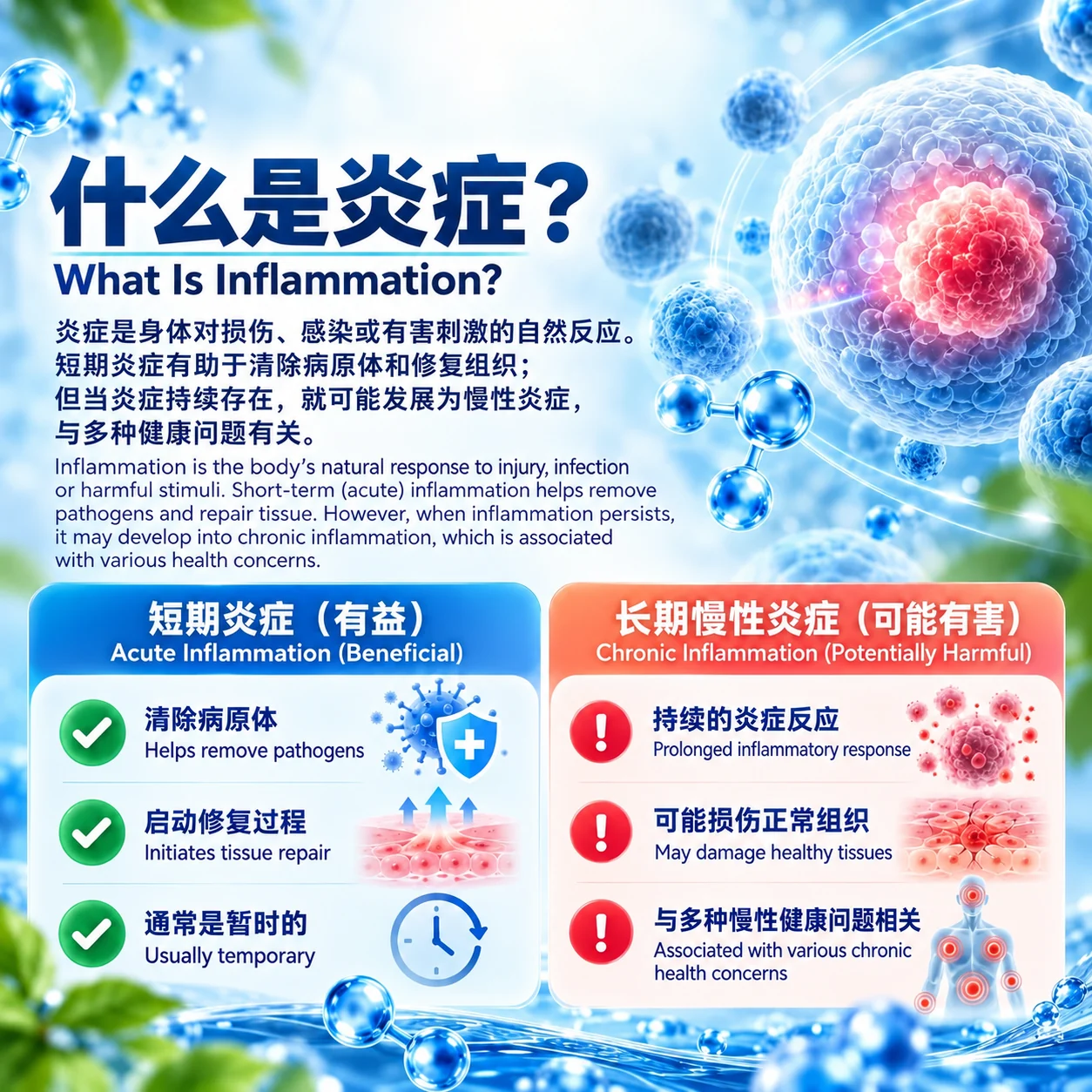
Inflammation is part of the body’s response to infection, tissue injury and other harmful stimuli. In a normal acute response, immune cells and signalling molecules help contain a threat and begin repair. Redness, heat, swelling or temporary discomfort can be features of this protective process.
Chronic inflammation is different. It describes a persistent or repeatedly activated inflammatory state that can accompany many conditions. It is not one disease, and it cannot be diagnosed from a marketing symptom list. Causes, affected tissues and appropriate care differ, so statements that one product “removes inflammation” are medically and scientifically misleading.
Why do researchers study molecular hydrogen?
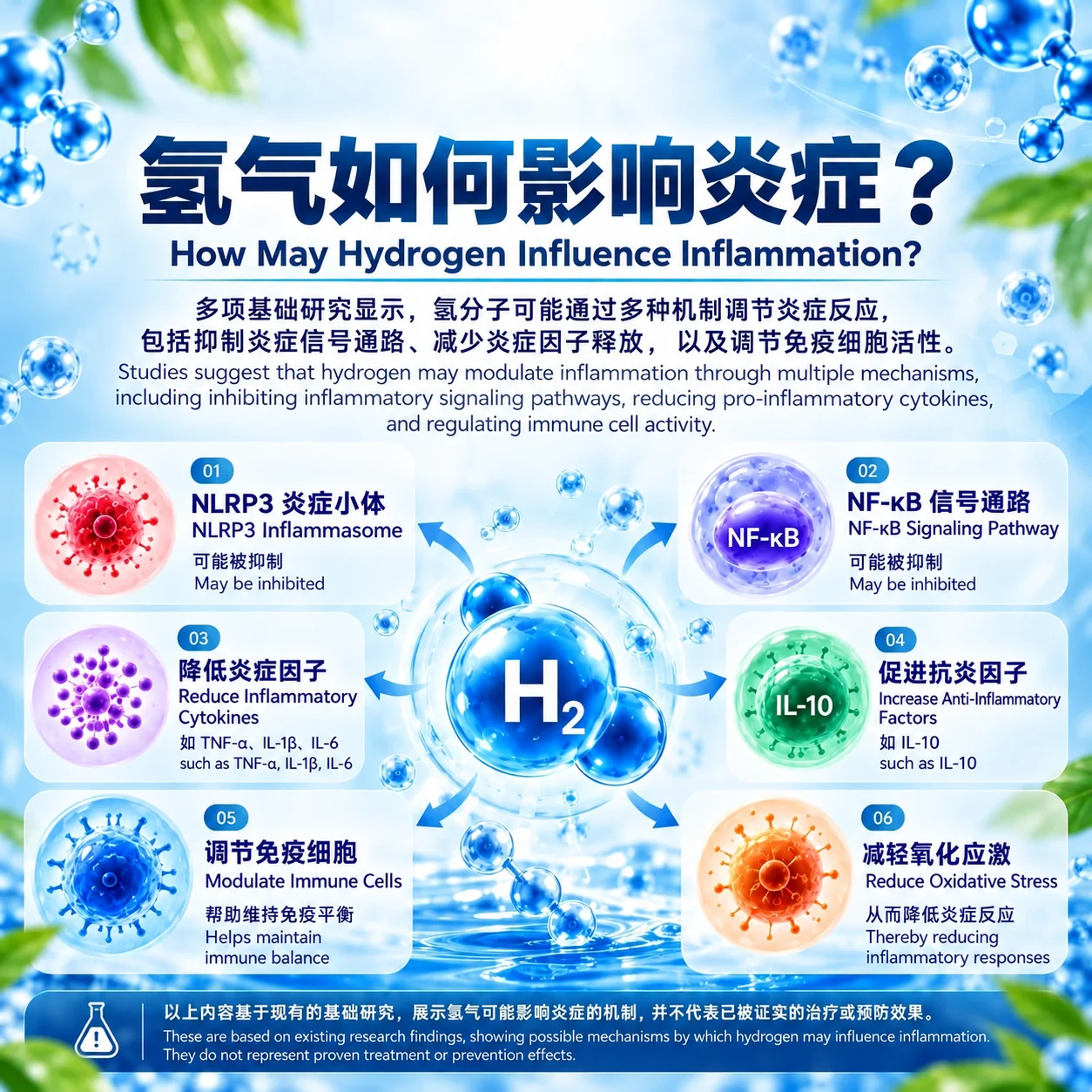
Early molecular-hydrogen research focused heavily on oxidative stress. Current work is broader: it investigates how H2 exposure may be associated with cellular signalling, stress-response systems, immune-cell behaviour and inflammatory mediators. Proposed effects are often described as modulation rather than complete suppression because reactive oxygen species and inflammation also have normal physiological roles.
A comprehensive review of 321 original papers reported that roughly three quarters of the studies available at that time used mice or rats. That evidence can identify mechanisms worth testing, but animal results do not determine a human clinical dose or validate a consumer-device claim.
Mechanisms under investigation
NF-κB signalling
NF-κB is a transcription-factor system involved in immune and inflammatory responses. Multiple preclinical hydrogen studies have reported changes in NF-κB-related activity and downstream mediators. This is a mechanistic observation; it does not mean every hydrogen exposure inhibits NF-κB in every person or condition.
NLRP3 inflammasome
NLRP3 is a protein complex involved in sensing cellular danger signals and promoting inflammatory cytokine maturation. Reviews discuss reduced NLRP3 activation in selected experimental hydrogen models. The strength of evidence depends on the model, exposure method and outcome, and clinical relevance must be tested separately.
Cytokines and immune-cell activity
Research has reported changes in mediators such as TNF-α, IL-1β, IL-6 and IL-10 in some models. These molecules participate in complex networks; “lower” is not universally better, and one biomarker change does not prove symptom relief or disease modification. Claims about supporting immune balance therefore need careful context and product-specific evidence.
Oxidative stress and inflammatory signalling
Oxidative and inflammatory pathways interact. Excess reactive species can activate inflammatory signalling, while immune activity can generate reactive species. Hydrogen research examines both direct chemical reactions and indirect adaptive responses. The field has not established one universal first molecular target that explains every reported result.
What is the current evidence level?
| Evidence level | What it can tell us | What it cannot prove |
|---|---|---|
| Cell experiments | Possible molecular pathways and dose-response questions | Safety, exposure or benefit in people |
| Animal models | Whole-organism distribution and biological responses under controlled conditions | A human treatment effect or retail-device protocol |
| Small human studies | Feasibility, short-term safety signals and preliminary outcomes | Broad efficacy across populations or diseases |
| Large replicated trials | More reliable estimates for a defined population, route and outcome | Automatic transfer to a different product or delivery route |
Clinical literature on molecular hydrogen is growing, but reviews describe substantial variation in gas concentration, water concentration, exposure duration, participant groups and endpoints. Positive findings should be weighed alongside neutral results, small samples and the need for replication. A pathway diagram is therefore an explanation of a hypothesis—not a certificate of clinical performance.
Hydrogen inhalation versus hydrogen-rich water
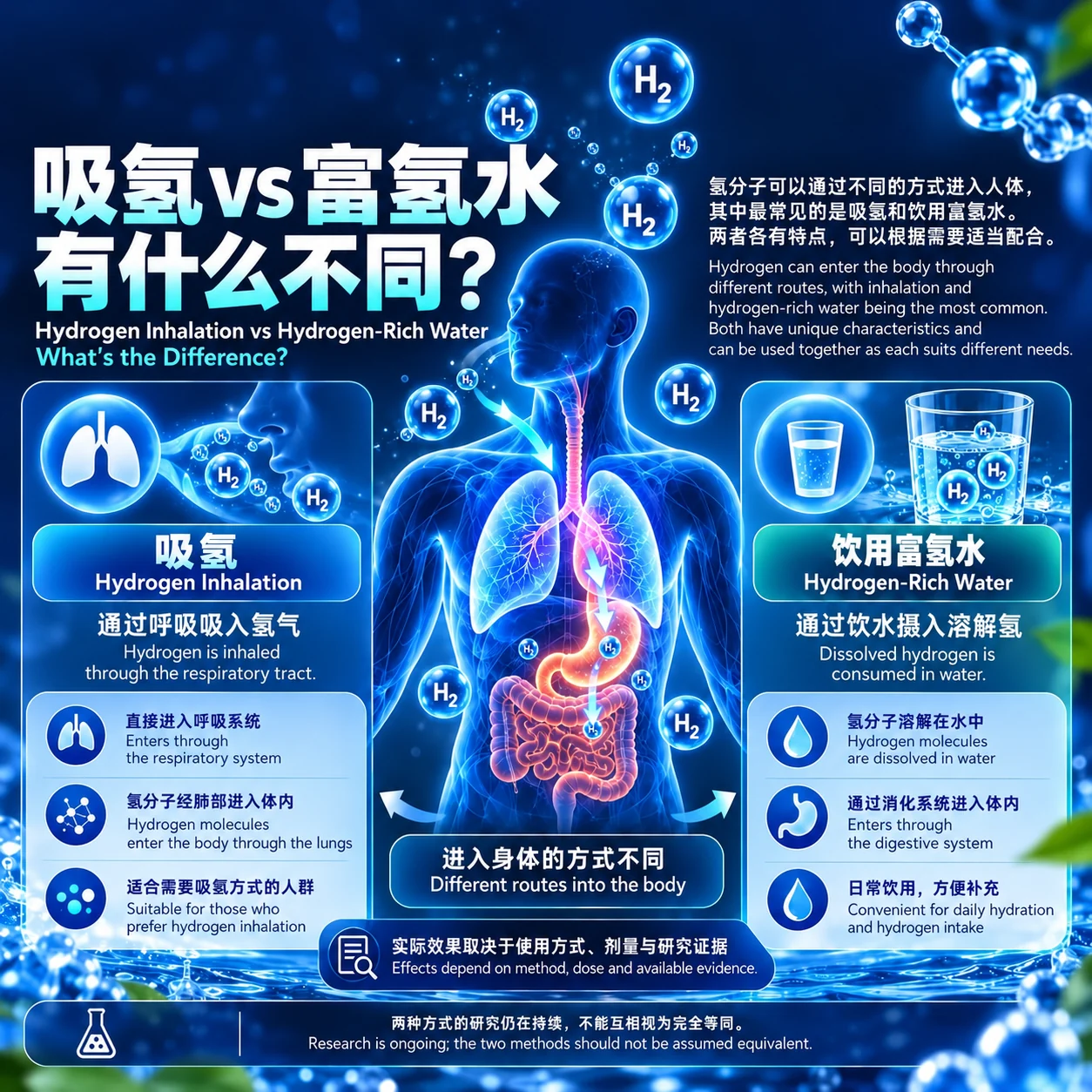
Hydrogen can be delivered by different routes, but the routes are not interchangeable:
- Hydrogen inhalation is defined by gas composition, hydrogen concentration, total or hydrogen-only flow, session duration and the user’s breathing interface. Engineering and flammability controls are essential.
- Hydrogen-rich water is defined by dissolved H2 concentration at consumption. Container pressure, temperature, headspace, opening and elapsed time can change the delivered amount.
Research from one route cannot automatically substantiate the other. A gas-inhalation study does not prove that a bottle produces the same exposure, while a hydrogen-water study does not establish an inhalation-device protocol. Users should also not combine methods on the assumption that “more is better”.
How B2B buyers should evaluate hydrogen equipment
Distributors and private-label brands can use scientific education to answer buyer questions, but product selection should rest on verified specifications:
- Exact model, revision and lawful intended use
- Hydrogen-only output versus total mixed-gas output
- Gas composition, measurement method and test conditions
- Water requirements, electrolysis architecture and maintenance schedule
- Session instructions, warnings and excluded users
- Voltage, plug, rated power and destination-market documentation
- OEM logo, package, manual language, MOQ, lead time and warranty
For inhalation equipment, compare the H300 300 ml/min hydrogen inhalation machine, H600 600 ml/min model and HO1000 hydrogen-oxygen inhalation machine. For portable hydrogen-water projects, review the H8 hydrogen water bottle. Confirm all current specifications before preparing catalogues, labels or advertising.
Frequently asked questions
Does molecular hydrogen cure chronic inflammation?
No such conclusion can be made from current general research. Mechanistic and early clinical findings do not prove that a commercial hydrogen product treats chronic inflammatory disease.
Does hydrogen suppress the immune system?
The research question is more nuanced. Studies investigate modulation of selected pathways and mediators, not blanket immune suppression. Effects can vary with the model, route, dose and condition.
Are NF-κB and NLRP3 changes proven in every user?
No. Much of this evidence is preclinical, and pathway changes cannot be assumed for every person or device.
Is hydrogen inhalation equivalent to drinking hydrogen-rich water?
No. They use different routes and exposure profiles. Their studies and product specifications must be evaluated separately.
What should distributors say in advertising?
Use accurate technology, operating and sourcing information. Describe molecular hydrogen as an active research field, disclose evidence limits and avoid disease-treatment, guaranteed anti-inflammatory or universal safety claims.
Selected research references
- Molecular Hydrogen in the Treatment of Respiratory Diseases — review of mechanisms and evidence, including NF-κB and NLRP3.
- Beneficial Biological Effects and the Underlying Mechanisms of Molecular Hydrogen — comprehensive review of 321 original articles and evidence distribution.
- Molecular Hydrogen Therapy—A Review on Clinical Studies and Outcomes — review of human studies and registered trials.
- Hydrogen Water: Extra Healthy or a Hoax?—A Systematic Review — concludes that larger, rigorous studies remain necessary.
Continue with the Youborui Molecular Hydrogen Research Library and our editorial and research policy.
Request hydrogen equipment information for your market
Explore the hydrogen inhalation machine manufacturer guide or hydrogen water equipment manufacturer guide. For a useful quotation, send the destination country, sales channel, model, expected quantity, voltage and plug, branding requirements and required documents through the Global Distributor & OEM RFQ Center or contact Youborui.