

The P92 is a plug-in, foot-contact wellness device that importers can demonstrate in a showroom when the exact model, electrical version and current instructions are confirmed. A useful demonstration explains what the controls do, shows the actual product, and gives buyers a checklist of documents to request. It should not promise a medical outcome or treat a frequency label as proof of exposure.
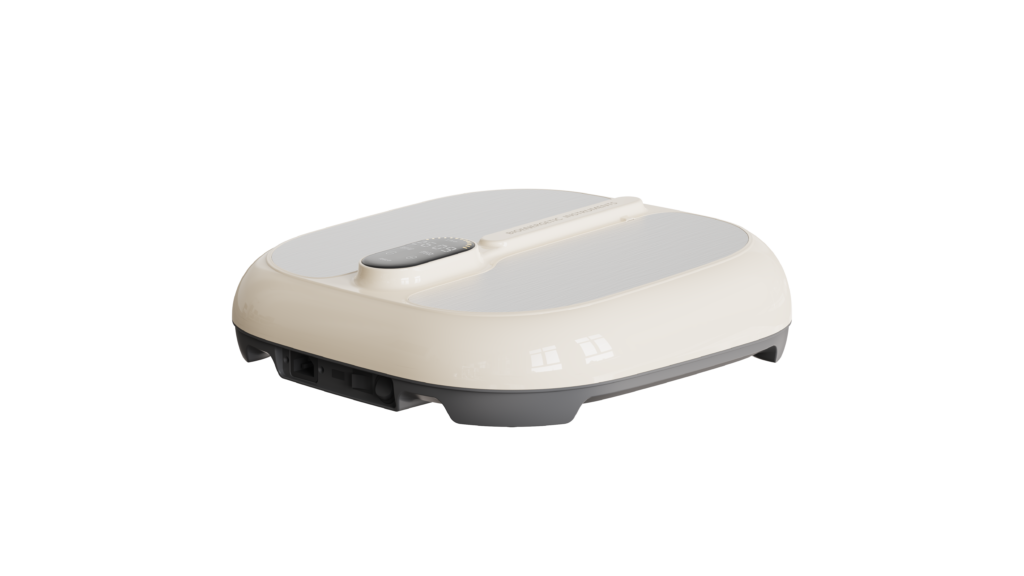
What is the P92 foot wellness device?
The P92 product page identifies a foot-contact device positioned for wellness channels. The supplier brochure lists a 160 W rated-power design and a mains-powered configuration. Those points describe the equipment; they do not establish magnetic-field strength, terahertz spectral output, tissue penetration or a health result. An importer should match every specification to the current manual, rating label and tested sample for the destination market.
That distinction matters because the P92 is often presented alongside PEMF and terahertz terminology. PEMF means pulsed electromagnetic fields; a responsible technical file should describe the waveform, operating mode, measurement position and instrument. Terahertz is a frequency unit in a different range: NIST defines 1 THz as 1012 Hz. A control-panel number expressed in MHz is not, by itself, a terahertz spectrum measurement. The two claims should be checked separately.
How to demonstrate P92 without overclaiming
A distributor demonstration should be repeatable by another member of the sales team. Begin with the exact sample that will be quoted. Confirm the model label and destination-market plug. Place the device on a level surface, explain the controls using the current manual, and show how a session is started and stopped. Use only the manual’s operating and safety instructions; do not invent a session duration or a therapeutic setting for a sales presentation.
- Identify the sample: photograph the product label, control panel, accessories and packaging revision.
- Confirm the power version: match the supply rating, plug and cord to the destination market.
- Walk through the controls: explain only modes documented for the delivered configuration.
- Show the safety information: make the current instructions available before anyone uses the sample.
- Record buyer questions: send requests for output data or certifications to the supplier rather than answering from an advertisement.
A demo is not a clinical study. Avoid statements about treating inflammation, improving circulation, restoring cells or achieving a specific depth of penetration unless the exact claim has suitable evidence and is permitted in the target market. The P92 should be presented as a wellness product, not as a substitute for medical care.
Which technical statements need separate evidence?
| Statement in a sales discussion | What the buyer should request | What not to infer |
|---|---|---|
| 160 W rated power | Current rating label and manual for the ordered version | Input power alone does not quantify PEMF field strength. |
| PEMF function | Waveform, operating mode, field measurement point, instrument and report holder | A frequency label alone does not define exposure or benefit. |
| Terahertz function | Configuration-specific spectral method, measurement range and report | An MHz control setting does not prove a THz emission band. |
| Private-label availability | Approved sample, artwork proof, manual language, packaging and production acceptance terms | A logo mock-up is not an approved finished product. |
These are procurement checks, not claims that a particular report already exists. For a broader explanation of model data, see the existing P92 technical buyer guide. Research on electromagnetic-field reporting likewise emphasizes that waveform, amplitude, pulse width and repetition frequency must be described together for reproducibility; see the peer-reviewed reporting paper indexed by PubMed. Research parameters must not be presented as measured P92 specifications without P92-specific testing.
What should an OEM or wholesale buyer approve?
Before listing P92 for distributors, lock the exact model revision and agree the commercial and technical acceptance points. The purchasing file should contain the approved physical sample, electrical version, user instructions, accessory list, artwork and outer-carton proof. Ask which legal entity holds each report and whether the tested specimen matches the private-label configuration. If a feature is optional or market-specific, show that difference in the quotation and manual rather than using one generic claim for every variant.
For buyers comparing foot-device formats, review P91A and P91C as separate models; do not transfer their controls or specifications to P92. The PEMF foot-device supplier page gives a sourcing overview. A model-specific quotation should state destination country, estimated quantity, branding, plug version and requested documents.
Frequently asked buyer questions
How is P92 powered?
P92 uses a mains connection. Confirm the rating label and plug for the ordered market version.
Does a 160 W rating tell me the PEMF field strength?
No. Rated power and measured magnetic field are different quantities. Request the method, mode and measurement position.
Can another brand’s foot-device data be used for P92?
No. Product specifications, tests and safety instructions must match the exact P92 configuration being supplied.
What should I send for a P92 OEM quote?
Send your destination market, expected volume, plug version, branding needs, manual language and document checklist.
Ready to evaluate P92? Review the P92 product page and send an exact-model request through the Youborui distributor and OEM RFQ center. Ask for the latest specification, sample terms and available model-specific evidence before publishing local claims.
Editorial note: This article describes sourcing and demonstration practice for wellness equipment. It does not claim that P92 diagnoses, treats, cures or prevents disease.