

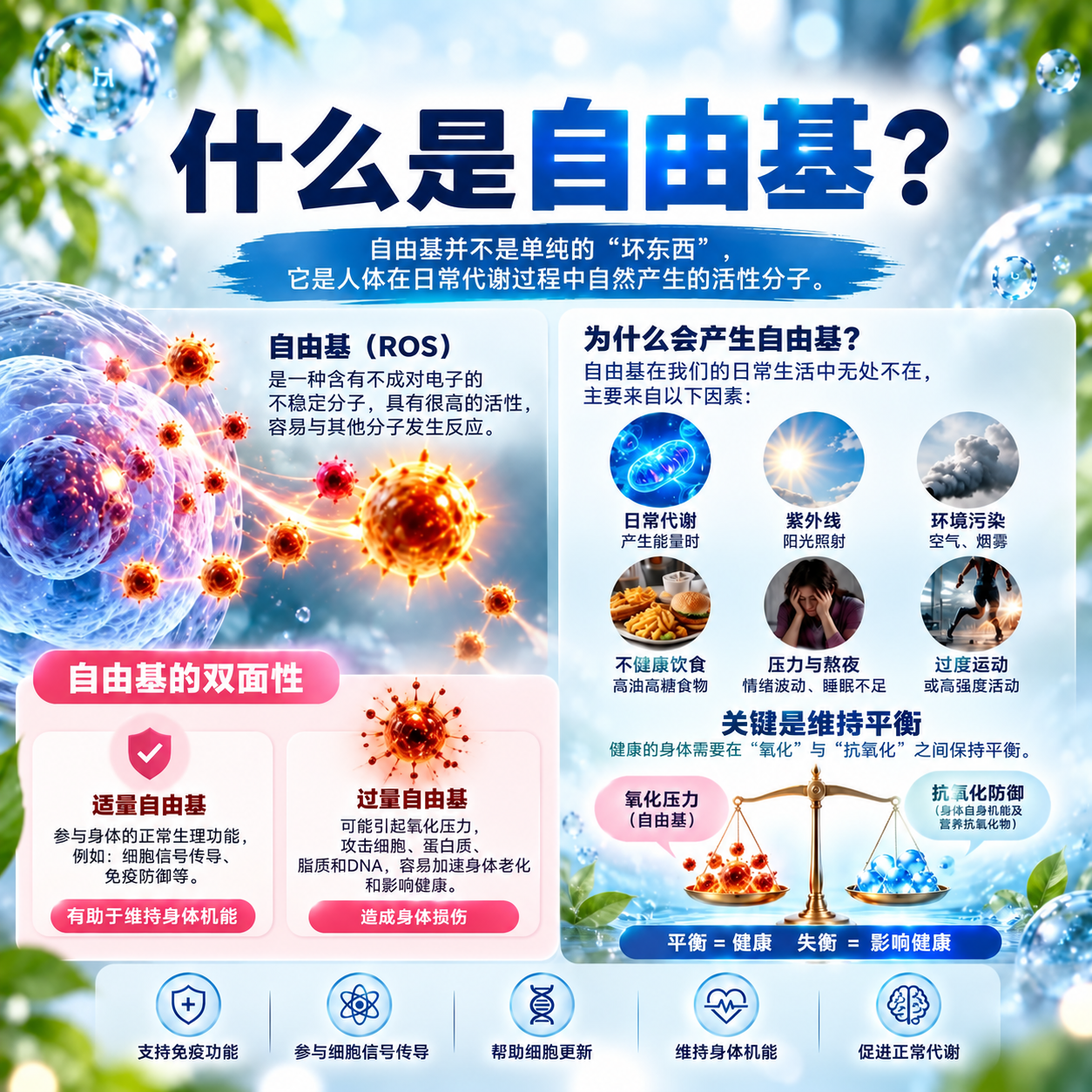
Key answer: A free radical has an unpaired electron and tends to react readily. Reactive oxygen species include both radicals and non-radical molecules. The body uses controlled reactive species for signalling and defence; oxidative stress describes an imbalance that can damage biological structures.
Free radicals are not all the same
Superoxide, hydroxyl radicals, hydrogen peroxide and peroxynitrite differ in reactivity, lifetime and biological role. Calling all of them “toxins” is scientifically inaccurate. Some are generated during normal metabolism and immune activity, while uncontrolled reactions can contribute to molecular damage.
Where oxidative pressure comes from
Mitochondrial metabolism, immune responses and enzyme reactions create reactive species internally. Ultraviolet exposure, smoke and some pollutants can add external pressure. Diet, sleep and exercise influence physiology, but no single product can be assumed to neutralize every source or reverse accumulated damage.
The body already has antioxidant systems
Enzymes such as superoxide dismutase, catalase and glutathione-related systems help regulate redox balance. Antioxidant defence is therefore a network, not a bucket that becomes “full” or “empty.” Research on H2 asks whether it alters selected reactions or adaptive pathways within this network.
Why balance matters in marketing
A credible article should not promise detoxification, anti-ageing, immune boosting or DNA repair from a hydrogen machine. Those statements require product-specific human evidence and regulatory support. A safer formulation is that molecular hydrogen is being investigated in redox biology and that outcomes remain protocol- and condition-specific.
Key points for readers and distributors
- Reactive oxygen species can have both physiological and damaging effects.
- Oxidative-stress biomarkers vary and do not always predict how a person feels or functions.
- Broad “eliminates free radicals” advertising is scientifically weak and may create compliance risk.
Related Youborui buyer resources
- What is hydrogen therapy? Evidence and safety
- SPE vs PEM hydrogen technology
- Hydrogen inhalation machine manufacturer
Frequently asked questions
Are free radicals always harmful?
No. Controlled reactive species participate in signalling and immune defence.
Does oxidative stress prove a disease?
No. It is a biological concept measured through context-dependent markers, not a stand-alone diagnosis.
Can a wellness device claim to repair DNA?
Such a claim requires strong product-specific clinical and regulatory evidence and should not be inferred from general research.
Continue reading
- Molecular Hydrogen for Wellness: What Does the Evidence Show?
- Why Is Molecular Hydrogen Studied? Oxidative Stress to Cell Signalling
- What Does Selective Antioxidant Mean in Hydrogen Research?
Selected research references
- Hydrogen and selected reactive oxygen species, 2007
- Hydrogen, oxidative-stress pathways and immune regulation, 2021
Source Hydrogen Wellness Equipment for Your Market
Youborui supports overseas distributors, importers and private-label buyers. For a useful model recommendation and quotation, send your destination country, target channel, model, quantity, voltage and plug, branding requirements and requested documents.
Request current specifications, OEM/ODM options and distributor pricing