

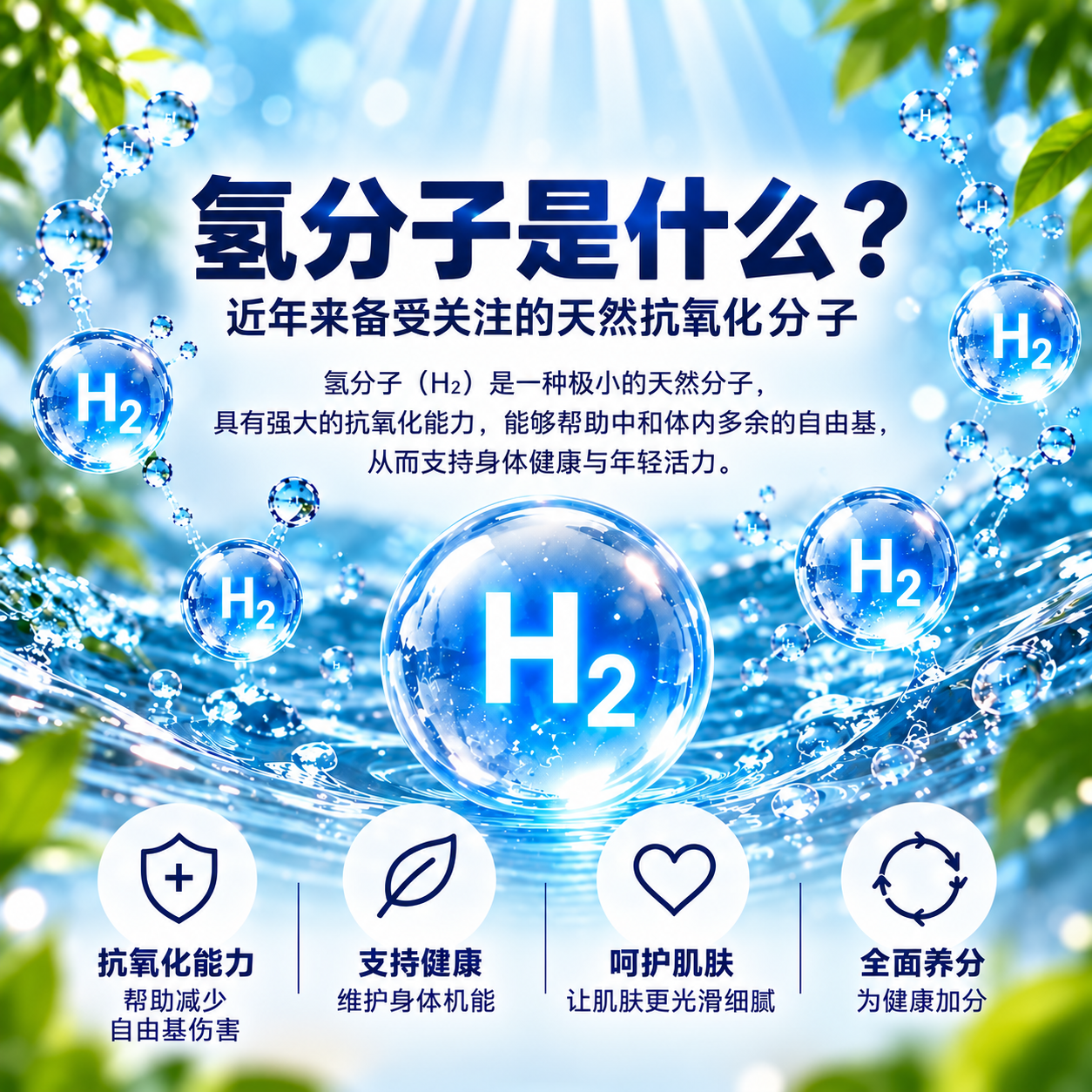
Key answer: Molecular hydrogen (H2) is a small, neutral gas being studied in redox biology, inflammation and cell signalling. Research interest does not make every health claim proven: evidence varies by delivery route, dose, study design and outcome.
What molecular hydrogen actually is
Hydrogen gas consists of two hydrogen atoms joined as H2. At room conditions it is colourless and odourless. Its small size allows rapid physical diffusion, but the phrase “small molecule” should not be treated as proof that a commercial product produces a health outcome. Chemistry explains exposure; controlled human studies must establish benefit.
Why antioxidant language needs context
Reactive oxygen species are not simply waste. Some participate in immune defence and cell signalling, while excessive or poorly controlled oxidative reactions can damage lipids, proteins and DNA. A landmark 2007 cell-and-rat study reported that H2 reduced hydroxyl radicals under its experimental conditions. Later work suggests that signalling responses, including Nrf2-related pathways, may also be involved. These mechanisms remain research questions rather than blanket product claims.
Three common delivery routes
Studies have used inhaled hydrogen, hydrogen-rich water and hydrogen-containing solutions. These routes are not interchangeable. Inhalation studies specify gas concentration, composition, flow, duration and setting; water studies depend on dissolved-hydrogen concentration, packaging and time after preparation. A result from one route cannot automatically validate another.
How overseas buyers should assess a device
Ask for model-specific gas composition, measured output, water requirements, electrical version, materials, maintenance schedule, safety instructions and available documentation. Confirm whether the destination market classifies the product as general wellness equipment or a regulated medical device. Marketing claims must match the actual product and local rules.
Key points for readers and distributors
- H2 research includes laboratory, animal and human studies, which carry different evidence weight.
- An antioxidant mechanism proposed in one model is not the same as a proven anti-ageing or disease-treatment effect.
- Device selection should be based on verified specifications and intended market use, not broad health slogans.
Related Youborui buyer resources
Frequently asked questions
Is molecular hydrogen a medicine?
Research protocols exist, but a consumer wellness machine is not automatically a medicine or approved treatment.
Does hydrogen remove every free radical?
No. That is an oversimplification; reactive species have different chemistry and physiological roles.
Which Youborui models can distributors compare?
B2B buyers can compare the H300, H600 and HO1000 series and request current gas-output, electrical and OEM information.
Continue reading
- Why Is Molecular Hydrogen Studied? Oxidative Stress to Cell Signalling
- Free Radicals and Oxidative Stress: A Molecular Hydrogen Guide
- What Does Selective Antioxidant Mean in Hydrogen Research?
Selected research references
- Ohsawa et al., hydrogen and cytotoxic oxygen radicals, Nature Medicine, 2007
- Biological responses to molecular hydrogen and inflammatory signalling, 2021
Source Hydrogen Wellness Equipment for Your Market
Youborui supports overseas distributors, importers and private-label buyers. For a useful model recommendation and quotation, send your destination country, target channel, model, quantity, voltage and plug, branding requirements and requested documents.
Request current specifications, OEM/ODM options and distributor pricing