

Molecular hydrogen has moved from an unusual laboratory experiment to a broad international research field. That history is often simplified into a marketing story in which every early discovery becomes proof of a modern health benefit. The real scientific timeline is more interesting—and more cautious.
Over approximately five decades, researchers have progressed from hyperbaric animal experiments to cellular mechanisms, small human studies, registered clinical trials, systematic reviews and consumer-facing hydrogen equipment. Each stage answered some questions while raising new ones about dose, delivery, measurement, safety and clinical relevance.
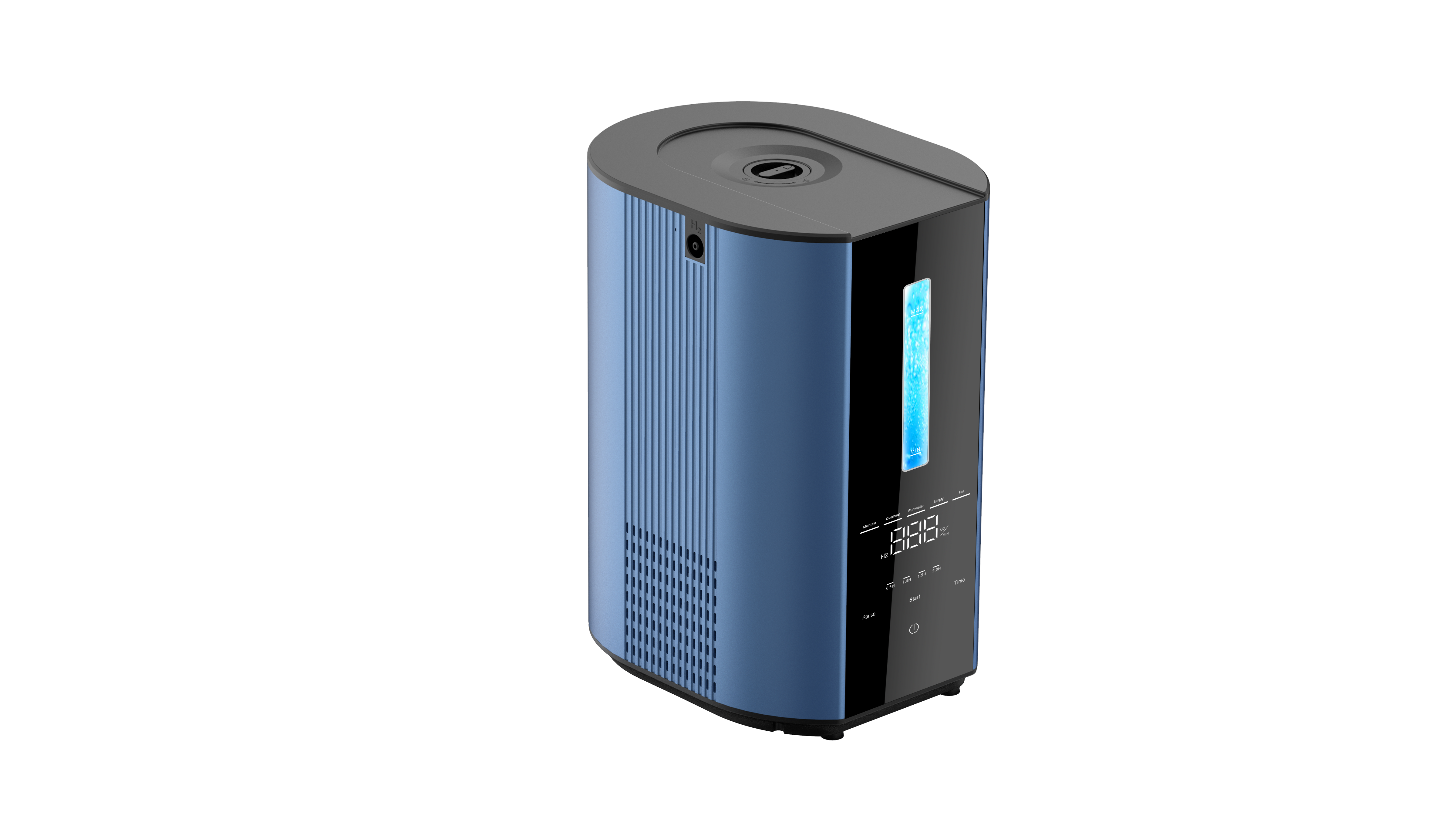
At a glance: key milestones
| Period | Research milestone | What it did—and did not—show |
|---|---|---|
| 1975 | Hyperbaric hydrogen study in tumour-bearing mice | Opened a research question; did not establish a human cancer treatment. |
| 2007 | Selective-reactive-oxygen study in cells and a rat brain-ischaemia model | Triggered modern research interest; remained preclinical. |
| Late 2000s–2010s | Expansion into hydrogen-rich water, inhalation, saline and topical routes | Produced many pilot studies with varied methods and endpoints. |
| 2020s | More randomized trials, safety studies, evidence reviews and trial registration | Improved the evidence base while showing that results remain mixed and indication-specific. |
| Today | Translation into wellness equipment and consumer products | Creates access, but also increases the need for testing, standards and responsible claims. |
1975: the first widely cited biomedical hydrogen experiment
In 1975, Malcolm Dole, F. Ray Wilson and William Fife published “Hyperbaric Hydrogen Therapy: A Possible Treatment for Cancer” in Science. Hairless mice bearing squamous-cell carcinoma were exposed to a gas mixture containing 97.5% hydrogen and 2.5% oxygen at a total pressure of eight atmospheres for periods of up to two weeks.
The experiment was scientifically provocative, but its conditions were far removed from ordinary life or modern consumer equipment. It was an animal study using an extreme hyperbaric environment. It did not demonstrate that low-concentration hydrogen, hydrogen-rich water or a home hydrogen generator treats cancer in people.
Why it matters: the paper showed that hydrogen could be investigated as a biologically active gas rather than treated only as an inert fuel or industrial material. It planted an early research seed, but it did not create a clinical standard.
1975–2006: a long period of limited attention
The 1975 method was difficult to reproduce outside specialist hyperbaric facilities, and hydrogen did not become a mainstream biomedical research topic. Antioxidant research during this period focused much more heavily on vitamins, enzymes and established biochemical pathways.
Hydrogen also presented practical challenges: it is flammable in certain mixtures, has low solubility in water and readily diffuses through materials. These properties complicate controlled delivery and measurement. Without compact electrolysis systems, suitable containers and validated analytical methods, translation into routine research was limited.
2007: the modern research revival
A major turning point came in 2007, when Ikuroh Ohsawa and colleagues published a paper in Nature Medicine. The team studied cultured cells and a rat model of focal cerebral ischaemia–reperfusion. Under the experimental conditions, molecular hydrogen reduced hydroxyl radicals and was associated with less brain injury in the rat model.
The study attracted attention for two reasons. First, it used low-concentration hydrogen under non-hyperbaric conditions, making the research concept more practical than the 1975 chamber experiment. Second, it proposed that hydrogen could affect highly reactive species without reacting identically with every reactive oxygen species involved in normal cell signalling.
The often-repeated phrase “selective antioxidant” comes from this period. However, the original work was still preclinical. A result in cultured cells and rats is a reason to conduct human trials—not proof of effectiveness in stroke, neurological disease or general anti-ageing care.
Late 2000s: new delivery methods broaden the field
After 2007, researchers explored multiple ways to administer molecular hydrogen:
- Hydrogen gas inhalation through controlled gas-delivery systems;
- Hydrogen-rich water containing dissolved H2;
- Hydrogen-rich saline in research and clinical settings;
- Topical or bathing approaches for early skin and exposure studies;
- Hydrogen-producing materials designed to release H2 under specified conditions.
This expansion made the field easier to study, but also introduced a major problem: different routes cannot be assumed to produce the same exposure. Concentration, total dose, duration, timing and tissue distribution differ substantially.
2010s: growth from mechanism studies to human pilots
During the 2010s, publications examined oxidative-stress markers, inflammation-related signalling, mitochondrial behaviour, cell survival and gene expression. Human studies appeared in exercise, metabolism, neurological conditions, dialysis, cardiovascular research and quality-of-life settings.
Many of these studies were pilots. Small sample sizes, short follow-up, different hydrogen concentrations and multiple endpoints made comparison difficult. Positive biomarker findings were sometimes repeated online as broad treatment claims, even when the study did not measure clinical recovery or long-term outcomes.
This period therefore produced both scientific momentum and a lasting lesson: a plausible mechanism is not the same as proven clinical benefit.
2011–2021: selected human-study milestones
Several studies illustrate how the evidence became more clinically structured:
- A randomized study of 49 people receiving radiotherapy for liver tumours reported differences in quality-of-life measures with hydrogen-rich water, but it was not evidence that hydrogen treats cancer.
- Small randomized and crossover studies investigated hydrogen-rich water in metabolic and exercise settings, with some positive signals and some neutral outcomes.
- A randomized double-blind pilot study of hydrogen inhalation in people with Parkinson’s disease reported no significant clinical benefit over placebo during the study period.
- A phase-one inhalation study exposed eight healthy adults to 2.4% hydrogen in medical air for 24–72 hours without clinically significant adverse events. The result was useful early safety evidence, not proof that every concentration or long-term use pattern is risk-free.
The mixed results are not a failure of the field. They are what clinical research is designed to reveal: effects that appear convincing in animals may become smaller, conditional or absent in humans.
2020–2023: larger trials and evidence mapping
Research activity became more organized through multicentre trials, trial registration and systematic evidence reviews. For example, a multicentre randomized double-blind trial compared a hydrogen–oxygen gas mixture with oxygen in people experiencing an acute exacerbation of chronic obstructive pulmonary disease. Such hospital-based research should not be generalized to unsupervised home use or to different devices.
A 2023 review searched trial registries and human publications through August 2023. It identified 47 ClinicalTrials.gov records, 34 UMIN registry records and 64 scientific publications on human studies. The same review noted that a broad database search for “hydrogen gas” produced more than 2,000 related publications.
Those figures require context. More than 2,000 search results do not mean more than 2,000 successful clinical trials. The broader number includes laboratory work, animal research, reviews, chemistry, delivery technology and studies that may not demonstrate efficacy.
2023 onward: systematic reviews reveal a mixed picture
As enough trials accumulated, researchers began pooling results. In exercise science, one meta-analysis reported small improvements in perceived exertion and blood lactate but no significant improvement in maximal oxygen uptake or endurance performance. Other reviews found promising signals while calling for larger, better-standardized trials.
This is an important stage in scientific maturity. The question is no longer simply “does hydrogen have a biological effect?” It is:
- Which route and concentration produce a measurable exposure?
- Which population and outcome may respond?
- How large and durable is the effect?
- Does it improve a clinically meaningful outcome?
- Can independent groups reproduce the result?
- What risks, interactions and device variables must be controlled?
From laboratory gas to everyday equipment
Parallel progress in electrochemistry has made hydrogen generation more compact. PEM/SPE water electrolysis, improved membrane-electrode assemblies, gas–liquid separation, sensors and portable power systems have supported hydrogen inhalation machines, hydrogen-water dispensers and portable bottles.
Technology availability must not be confused with medical validation. A device can reliably generate hydrogen while the evidence for a particular health claim remains uncertain. Product quality and clinical efficacy are separate questions.
Buyers can learn more in SPE vs PEM Hydrogen Technology and What Is Hydrogen Therapy?.
What the historical record does not justify
Five decades of research do not justify saying that molecular hydrogen:
- has been proven to cure cancer or neurological disease;
- reverses ageing or repairs every damaged cell;
- works equally through inhalation, water, bathing and every other route;
- is free of risk at every dose and concentration;
- can replace medication, rehabilitation, surgery or emergency treatment;
- is “clinically proven” simply because thousands of search results mention hydrogen.
What the next research milestones should be
The field is likely to advance through better standardization rather than more dramatic claims. Priorities include:
- larger preregistered randomized trials with adequate controls;
- consistent reporting of concentration, total dose and exposure timing;
- direct measurement at the user outlet or point of consumption;
- longer follow-up and systematic adverse-event reporting;
- clear separation of exploratory biomarkers from clinical outcomes;
- independent replication and publication of neutral results;
- device standards for gas composition, purity, materials and safety controls.
What this history means for buyers and distributors
A credible hydrogen-equipment supplier should explain both the technology and the limits of current evidence. Buyers should request model-specific output testing, gas analysis, water requirements, electrical documentation, operating instructions and responsible marketing language.
Youborui offers models for wholesale and private-label evaluation, including the H300 hydrogen inhalation machine, H600 hydrogen generator, HO1000 hydrogen-oxygen machine and HO1000L system.
Hydrogen-water buyers can also review Hydrogen-Rich Water Benefits: What Human Research Shows.
Frequently asked questions
Was molecular hydrogen first studied for health in 1975?
The 1975 Science mouse experiment is one of the earliest and most frequently cited modern biomedical studies. It used an extreme hyperbaric environment and should not be treated as evidence for everyday use.
Why is the 2007 study considered a milestone?
It demonstrated biological effects in cells and a rat ischaemia–reperfusion model using low-concentration hydrogen under non-hyperbaric conditions, stimulating substantial new research.
Do thousands of hydrogen publications prove that it works?
No. Publication counts combine different study types and quality levels. Each claim must be evaluated using relevant, controlled human evidence.
Is molecular hydrogen an approved treatment?
Approval and intended use vary by product, claim and country. Research interest does not automatically make consumer hydrogen equipment an approved medical treatment.
Selected historical and evidence references
- Dole M, Wilson FR, Fife WP. Hyperbaric hydrogen therapy: a possible treatment for cancer. Science. 1975.
- Ohsawa I, et al. Hydrogen acts as a therapeutic antioxidant by selectively reducing cytotoxic oxygen radicals. Nature Medicine. 2007.
- Johnsen HM, Hiorth M, Klaveness J. Molecular Hydrogen Therapy—A Review on Clinical Studies and Outcomes. 2023.
- Cole AR, et al. Safety of prolonged inhalation of hydrogen gas in air in healthy adults. 2021.
- Hirayama M, et al. Randomized double-blind placebo-controlled pilot trial of hydrogen inhalation for Parkinson’s disease. 2021.
- Zheng ZG, et al. Hydrogen/oxygen therapy in acute exacerbation of COPD: multicentre randomized trial. 2021.
- Zhou K, et al. Molecular hydrogen supplementation, fatigue and aerobic capacity: systematic review and meta-analysis. 2023.
Educational notice: Historical research does not establish that any Youborui product diagnoses, treats, cures or prevents disease. Product claims and intended use must comply with the destination market.
Request model specifications, research-oriented product information and OEM/ODM details.