

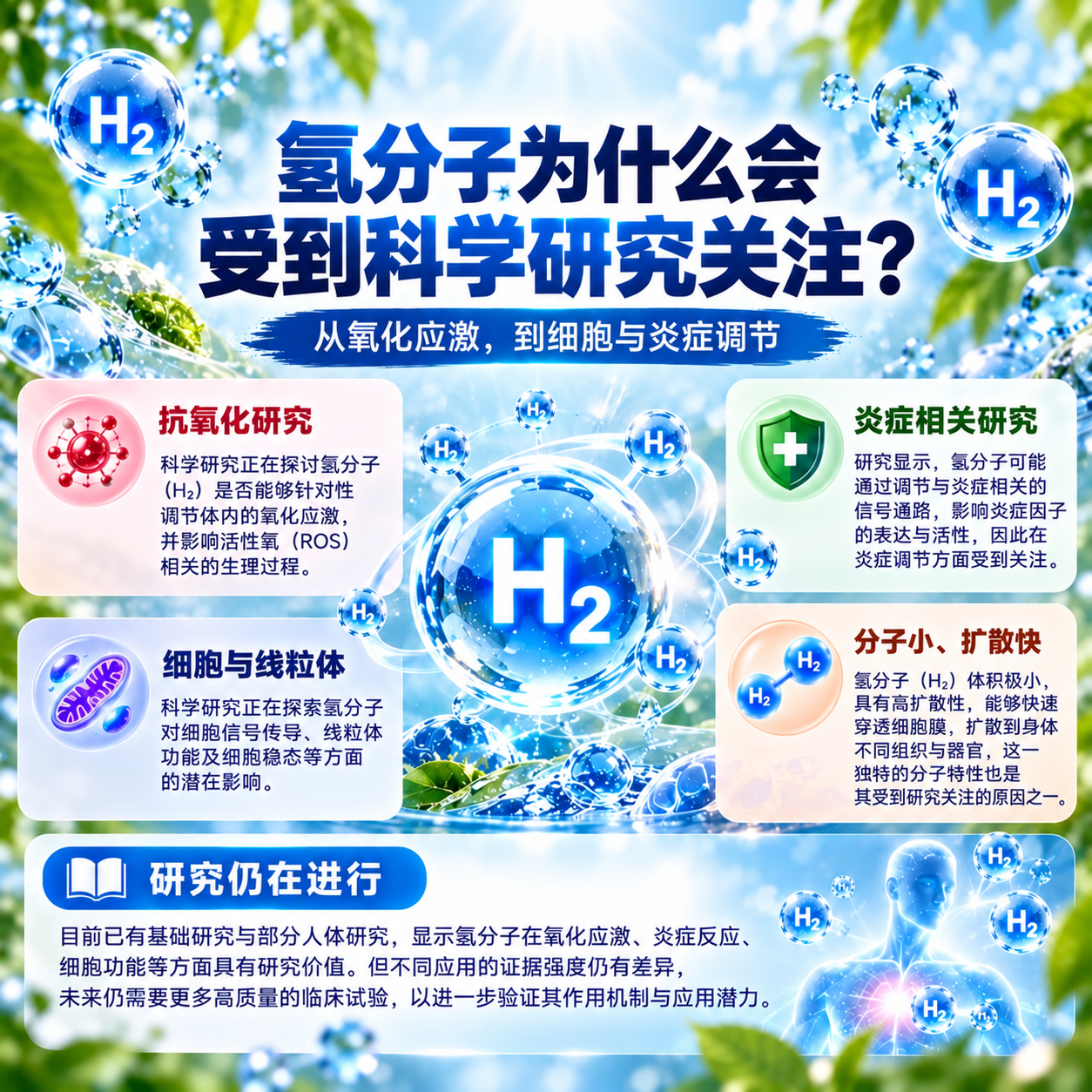
Key answer: Scientists study H2 because it is small, diffuses quickly and has produced measurable redox and signalling effects in experimental systems. The field includes promising mechanisms but also mixed protocols, many preclinical studies and unresolved questions about dose and clinical relevance.
From direct radical chemistry to signalling
The early selective-antioxidant hypothesis focused on direct reactions with highly reactive species such as hydroxyl radicals. A direct-scavenging explanation alone may not account for effects reported at low tissue concentrations. Researchers therefore investigate adaptive signalling, including Nrf2, NF-kB-related inflammatory pathways and mitochondrial responses.
Inflammation is a process, not one target
Inflammation protects against injury and infection but can become dysregulated. Cell and animal studies have reported changes in selected cytokines after hydrogen exposure. Such changes are useful for forming hypotheses, but they do not establish that inhaling hydrogen treats an inflammatory disease in people.
Mitochondria and cell resilience
Some experiments examine membrane potential, ATP production, apoptosis and stress-response enzymes. A cell-culture study described a mitohormesis-like response in which mild mitochondrial stress activated defensive pathways. This is mechanistic evidence; it does not supply a universal dose or prove a wellness benefit.
What high-quality human evidence should include
Useful clinical studies need prospective registration, adequate sample size, randomisation where possible, a suitable control, standardized exposure, meaningful outcomes and transparent adverse-event reporting. Biomarker movement alone is weaker than reproducible improvement in a patient-relevant outcome.
Key points for readers and distributors
- Mechanistic plausibility helps explain what to test; it does not establish product efficacy.
- Hydrogen concentration, gas mixture, exposure duration and delivery route can change study results.
- Negative and neutral studies are as important as positive findings when evaluating a category.
Related Youborui buyer resources
- Molecular hydrogen research library
- Editorial and research policy
- Hydrogen generator OEM/ODM services
Frequently asked questions
Why do studies report different results?
Protocols, populations, concentrations, outcomes and study quality differ substantially.
Is Nrf2 activation proven in every user?
No. Much pathway evidence comes from cells or animals and should not be generalized.
How should distributors use research?
Use it for responsible education, not unsupported treatment claims; keep product specifications and scientific evidence clearly separated.
Continue reading
- Molecular Hydrogen for Wellness: What Does the Evidence Show?
- Free Radicals and Oxidative Stress: A Molecular Hydrogen Guide
- What Does Selective Antioxidant Mean in Hydrogen Research?
Selected research references
- Hydrogen and cytotoxic oxygen radicals, 2007
- Molecular hydrogen, mitochondria and mitohormesis in cultured cells, 2017
- Nrf2-related neuroinflammation research in cells and mice, 2021
Source Hydrogen Wellness Equipment for Your Market
Youborui supports overseas distributors, importers and private-label buyers. For a useful model recommendation and quotation, send your destination country, target channel, model, quantity, voltage and plug, branding requirements and requested documents.
Request current specifications, OEM/ODM options and distributor pricing